
Visiting Banff in winter 2026/27: Everything you need to know

Banff National Park was the first place I ever visited in Canada. It’s actually the reason I decided to apply for my 2-year working holiday visa in the first place! Two years turned into six, and I ended up going back to Banff five times while living in Canada! I’ve been lucky to see the park in every season and while summer and fall are spectacular, there is something very magical about visiting Banff National Park in winter.
From October to April, Banff transforms into a striking winter wonderland. It’s a wonderful time to visit and see a different side of the park. I’ve done two trips to Banff National Park in winter now; the first was in November 2019 and the second was in February 2022.
Travelling in winter is very different to travelling in summer and requires extra planning. I’ve had a lot of questions about road conditions, when to go, and what to pack, so I’ve put together this detailed guide to answer your questions. I’m sharing everything you need to know when planning a trip to Banff National Park in winter, including how to get around, driving tips, and more. Let’s jump in!
Read next | Looking for the best things to do in Banff in winter? I have a separate guide which covers the different activities you can do.
Disclaimer: This blog post features some affiliate links, which means I get a small commission if you make a purchase. There’s no extra cost to you, but it just helps me to keep writing these free guides and itineraries. Thank you for your support!
TLDR: Visiting Banff National Park in Winter Quick Tips
Winter season
October to April
Temperatures
Expect average lows of -15°C (5°F) with December, January and February being the coldest months where temperatures can drop to -30°C (-22°F).
Best time to go
End of January or beginning of February
What you need to know
- Banff National Park is open but not all popular attractions are
- Moraine Lake is closed from October to June each year
- You will need a National Park Pass to explore Banff in winter
- Bears will be hibernating but stay vigilant
How to get there
Fly into YYC Calgary Airport, rent a car or book a shuttle to Banff.
How to get around
If you don’t want to drive in Banff in winter, you can use Roam Transit’s bus network to get around
Best things to do in Banff in winter
- Banff Gondola sunset ride
- Johnston Canyon ice walk
- Lake Louise day trip
- Skiing/ snowboarding
- Snowshoeing
A complete guide to visiting Banff in winter (2026/27)
The two most common questions I get about visiting Banff National Park in winter are: 1) Is it worth visiting Banff in winter? 2) Is it safe to visit Banff in winter?
The answer to both questions is yes! Known for its vivid blue lakes, most people think of Banff as a summer destination. While seeing the colourful lakes is definitely a bucket list experience, exploring them when they are completely frozen is something else! Visiting Banff National Park in winter is a different experience but it’s just as magical. There are some amazing ski resorts for those who love skiing but there are also plenty of fun winter activities in Banff for non-skiers too.
In terms of safety, I’ve always found Banff very safe in winter. The drive from Calgary to Banff is pretty straightforward as you’re on the highway the entire way so you don’t have to worry about any windy mountain roads! Once you’re there, it’s easy to get around via public transport (more on that later!) or by car as the roads are usually well-maintained.
In this guide, I’m covering everything you need to know before you visit Banff in winter. If you still have questions after reading this guide, just drop them in the comment section so I can help!
What you need to know before visiting Banff in winter
Your experience will depend on when you visit Banff in winter
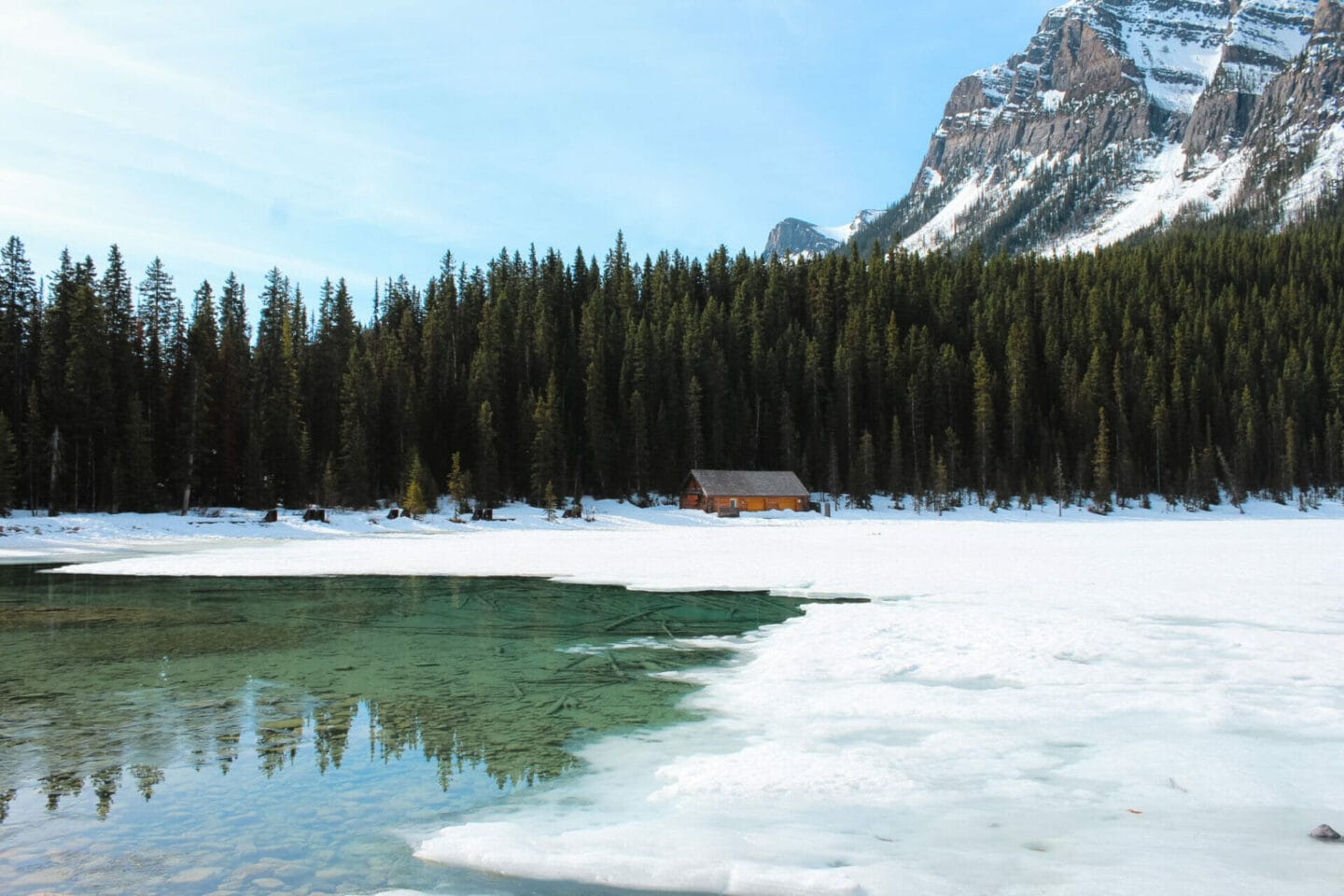
The winter season typically starts in October and continues through to April; however, this varies each year depending on the weather. Banff normally gets its first snowfall in October or November and the lakes are fully frozen by December or January. When I went in May 2018, the lakes were only just starting to thaw which was actually a very pretty sight.
December
If you want to experience the Christmas atmosphere in Banff then I would try and visit in early December (ideally the second or third week). There might not be a lot of snow in the town at this point but accommodation is usually cheaper at the beginning of December as it’s considered “off-peak”. You could also visit during the Christmas holidays but you would need to book accommodation well in advance.
January and February
January and February are the peak winter months. The lakes are usually frozen solid so you can walk and skate on them and the waterfalls have transformed into giant ice sculptures. This is also a great time to visit if you love snowboarding and skiing. Just be aware that accommodation is normally a bit pricier as it is peak ski season.
March and April
In March and April, the weather is starting to warm up and the lakes are gradually beginning to thaw so you can’t walk or skate on them. There is usually a greater risk of avalanches so many snowshoe and hiking trails are closed. It’s still a lovely time to visit but you might find that you can’t do all of the winter activities that you’d like to.
My personal recommendation? Go at the end of January or beginning of February.

Banff National Park gets very cold in winter!
Winter in Banff can be very cold! December, January and February are the coldest months and temperatures can drop to -30°C (-22°F). These cold snaps can last for a week and even when the temperatures increase, you’re still looking at an average low of -15°C (5°F).
Banff is slightly warmer than other mountainous areas in Alberta due to the Chinook winds but the air is cold and dry. You’ll definitely need your lip balm and moisturiser! The mountains and ski hills get a lot of snow but be prepared for a decent amount of snow in the town of Banff and Lake Louise.
These low temperatures can be off-putting, but having the right clothing makes a huge difference. When I went in February, we had -20°C days but we had lots of layers and warm clothing which meant we could get outside and explore and we honestly didn’t notice the cold. I’ve included a whole section later about what we packed for our winter trip to Banff.
Banff is open in winter but some popular attractions aren’t
Unlike some destinations, Banff National Park is open all year round. The main visitor attractions such as Banff Gondola, Upper Hot Springs, Cave & Basin Museum are open, along with all of the shops, restaurants, and bars on Banff Avenue.
Natural attractions like the local lakes and hiking trails are also normally open but you should always check with the Visitor Centre. You need to use common sense to determine if they are safe to visit in snowy conditions. The Visitor Centre will be able to tell you if there are avalanche risks but it’s your responsibility to do the research if you plan to venture into the backcountry to hike or snowshoe.
There are plenty of winter activities close to the town of Banff that don’t involve going into the backcountry. I would advise against going into the backcountry in winter if you don’t have avalanche training or experience in the mountains.
Moraine Lake
Moraine Lake road is always closed from October until early June due to avalanche risk. Some people snowshoe or cross-country ski in, but I wouldn’t risk it unless you are incredibly experienced as this is serious avalanche territory.
Icefields Parkway
Although technically outside Banff National Park, most man-made attractions along the Icefields Parkway are also closed in winter. If you plan to drive from Banff to Jasper, the Jasper Skywalk, Glacier Explorer, and Icefields Discovery Centre are all closed. Services are also closed from November to April so make sure you have plenty of gas and supplies before starting this drive. Always check the road conditions report before heading out.
You will need a Parks Pass to visit Banff in winter
To visit Banff National Park, you’ll need to buy a National Park Pass which contributes to the upkeep of the parks. There are ticket booths along the highway and at the park entrances. You don’t need separate passes for different parks; you can visit all the National Parks (Banff, Jasper, Yoho, and Kootenay) with the same pass.
Good to know | Admission to Banff National Park is free for all visitors again this summer through the Canada Strong Pass. However, this ends on September 7, 2026, so it won’t be applicable to winter visits.
2026 Daily Admission Prices
| Adult | $12.25 |
| Senior | $10.75 |
| Youth | free |
| Family/Group | $24.50 |
| Commercial Group, per person | $10.42 |
2026 Parks Canada Discovery Pass (Annual pass)
| Adult | $83.50 |
| Senior | $71.50 |
| Family/Group | $167.50 |
Be prepared for local wildlife
You will likely encounter wildlife during your time in Banff. Elk and deer frequently wander the town and are used to people. However, please do not get too close and do not try to feed them. There are around 65 Grizzly bears in Banff National Park. Although it’s very likely they will be hibernating in winter, there is always a chance that you may come across one. Bears are solitary creatures and will fiercely defend themselves and their cubs. I recommend reading Parks Canada’s articles on bear safety to make sure you’re properly prepared.
Protect wildlife and nature by following the Leave No Trace principles
Please follow the Leave No Trace Principles during your time in the park. These are guidelines to help you plan, prepare and explore the outdoors more responsibly. They include staying on the designated trails, not touching or removing any natural objects, packing out all your trash, and respecting wildlife. I highly recommend checking the Parks Canada website before you leave for important information about safety in the park.

Travelling to and around Banff in winter
How to get to Banff in winter
Calgary International Airport (YYC) is the closest airport to Banff. From there, it’s a 1.5-hour drive along the Trans-Canada Highway. On my first winter trip, I was very nervous about driving from Calgary to Banff in potentially icy conditions, but the highway was clear the whole way. Canadians are used to heavy snow falls and the highways are generally very well-maintained and clear of snow.
By car
You can book and pick up a rental car directly from Calgary airport. Although the highway is usually clear of snow, the roads in and around the town of Banff can be quite icy. You technically only need winter tires if you plan to drive up the Icefields Parkway. It’s personal choice but in winter I always opt for a vehicle that has 4-wheel drive and winter tires.
Travel tip | I personally use Discover Cars to find the cheapest rates on rental cars. They clearly show what is and isn’t included in the price. If you need any help, their 24/7 customer service is very good.
By bus
There are several companies that offer private shuttle bus transfers from Calgary International Airport to Banff but here are my top choices:
- Banff Airporter: Runs regular shuttles between Calgary International Airport, Canmore and Banff. This service runs every hour and takes you directly from the airport to Banff. I’ve used them twice now and have found them to be reliable and affordable.
2026 prices:
- Adults: $82.90 one-way, $165.80 return
- Seniors: $74.61 one-way, $149.22 return
- Children (6 –17): $41.45 one-way, $82.90 return
- Brewster Express: Connects Calgary to Banff, Canmore, Kananaskis, Lake Louise and Jasper. The coaches are very comfortable and have large viewing windows so you can admire the views en route. Like the Banff Airporter Shuttle, it takes 2 hours and you can select your drop off location from a list of hotels and lodges.
2026 prices:
- Adults: $92 each way
- Children: $59.80 each way
Read next | How to visit Banff in 2026 without a car >

How to get around Banff in winter
The town of Banff is quite compact which makes getting around on foot very easy. The main part of the town stretches from Buffalo Street near Bow River to Moose Street and is less than 1 km long. This is where you’ll find most of the shops, restaurants and bars, as well as local attractions like the Visitor Centre and the Whyte Museum of the Canadian Rockies.
Banff has a great public transit system so with some careful planning you can see a lot of the iconic sights in Banff in winter by public transport. Some bus routes only operate in the summer but there are a few tours that run in winter to the destinations on those routes. I have a detailed guide with everything you need to know about exploring Banff without a car but here are the ones that run in winter:
ROUTE 1: SULPHUR MOUNTAIN
This route is open all year and takes you to Banff Park Museum, Banff Hot Springs and the incredible Banff gondola.
ROUTE 2: TUNNEL MOUNTAIN
This service runs between Tunnel Mountain campgrounds, downtown Banff and the Fairmont Banff Springs Hotel. It is available daily throughout the year.
ROUTE 3: CANMORE/ BANFF REGIONAL
This service runs between Banff and Canmore regularly each day and stops at a number of places along the way.
ROUTE 5: CANMORE LOCAL
This is a local bus service around Canmore and is very handy if you want to visit the Three Sisters.
ROUTE 8X: BANFF TO LAKE LOUISE SHUTTLE (ALL YEAR)
Roam Public Transit runs a daily, year-round service from Banff to Lake Louise. This express shuttle bus departs from Banff High School Transit Hub and travels directly to Lake Louise Village and lakeshore. I recommend booking in advance so you get seats on your preferred service.
ROUTE 9: BANFF TO JOHNSTON CANYON SHUTTLE (ALL YEAR)
This service now runs all year round which is great if you want to visit Banff National Park in winter without a car. From October to May, this service only operates on Saturdays and Sundays and statutory holidays (in summer, it’s a daily service). Again, I recommend booking tickets in advance for this route.

Practical tips for driving in Banff National Park in winter
If you’re visiting between November and April, you need to be prepared for winter road conditions. The roads will be icy at times and can be dangerous if you’re not used to driving in winter weather. Here are some tips I’ve picked up from my two winter trips to Banff:
- If you rent a car for your trip to Banff, ensure that the vehicle is equipped with winter tires. Although it’s not mandatory for the town of Banff, if you plan to drive up the Icefields Parkway you must have them.
- Always check the road conditions on 511 Alberta before you set off. There are often unexpected road closures in winter due to the weather and maintenance. Snowstorms and blizzards are very common during the winter in Banff.
- The weather can be very unpredictable and incredibly cold so make sure you have plenty of supplies and warm layers in case you do break down.
- Pack a shovel and an ice scraper. Most rental cars will include an ice scraper, but I’d also recommend picking up a cheap snow shovel if you’re planning to drive up the Icefields Parkway. It’s better to be prepared in case you need to dig your car out of a parking spot!
- Make sure you fill up on gas before you start driving. Some places are more remote and the weather can turn quickly and causing traffic jams.
A word of caution | Don’t drive on the Icefields Parkway in the winter if you are not comfortable driving in winter conditions. It’s not the place to learn! It’s a dangerous road and if you aren’t confident driving in winter conditions then don’t risk it.

Where to stay in Banff National Park in winter
Banff has no shortage of accommodation options so there is something to suit everyone’s budget and taste! Here are my favourite places to stay in Banff National Park in winter (spoiler alert: they all have lovely hot tubs!):
Moose Hotel & Suites
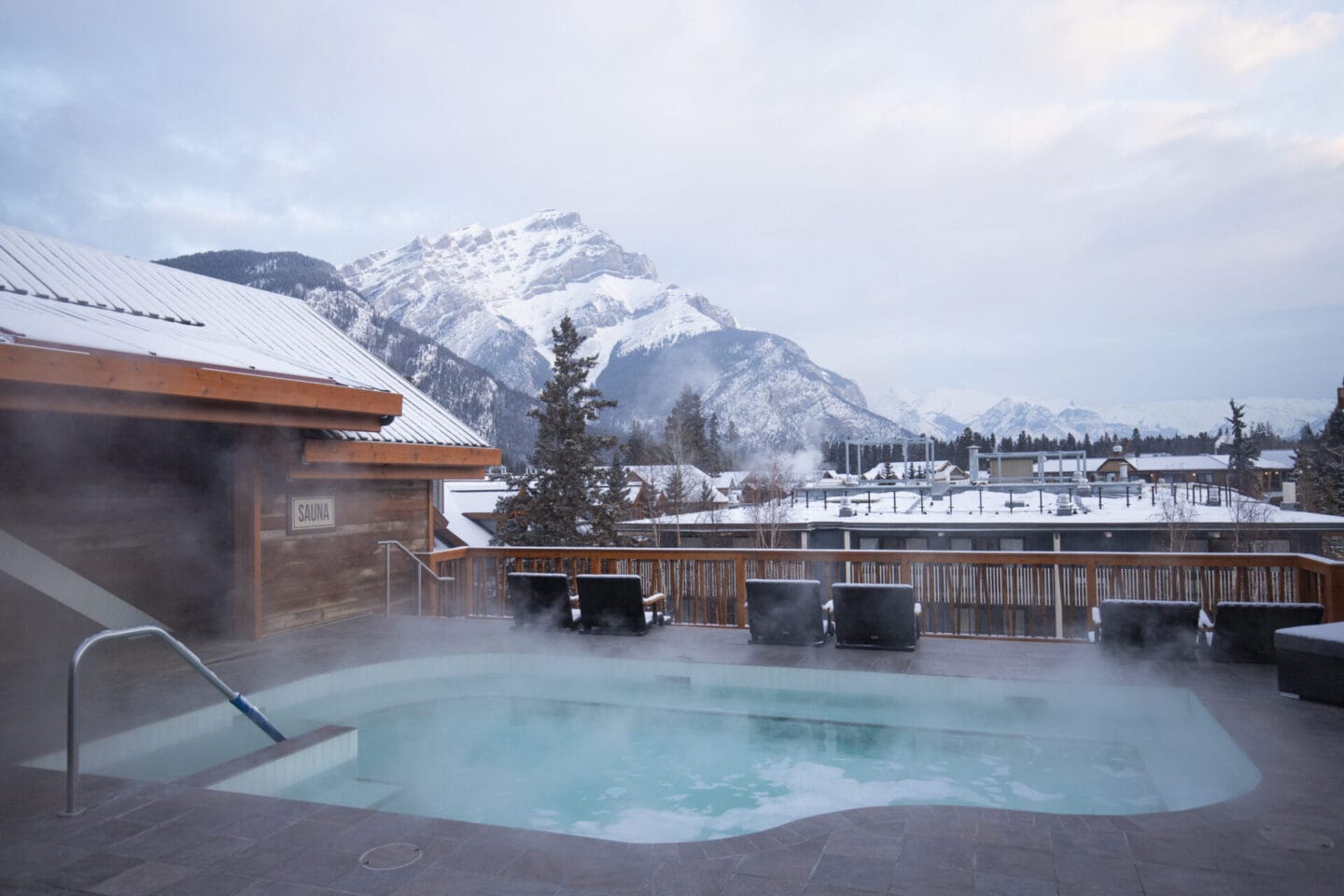
Moose Hotel & Suites is my favourite place to stay in downtown Banff in winter. Located on Banff Avenue, the hotel is just a few minutes’ walk from the shops and restaurants. The rooms have beautiful views of the Canadian Rocky Mountains but it’s the amazing rooftop hot tubs that really won me over! They’re the perfect place to start the day and watch the sunrise, or relax at night after a busy day sightseeing. The hotel has everything you need and the staff are fantastic. Check prices >
Hidden Ridge Resort
Hidden Ridge Resort is tucked away on Tunnel Mountain but it’s only a 5 minute drive from Banff Avenue so you get the best of both worlds. Not only does it have the most beautiful views from the outdoor hot pools, but each condo has a full kitchen and wood burning fireplace. It was so nice to come back after a busy day sightseeing and sit by the fire. You can even get a s’mores kit from reception and enjoy them from the comfort of your own condo! Check prices >

Fox Hotel & Suites
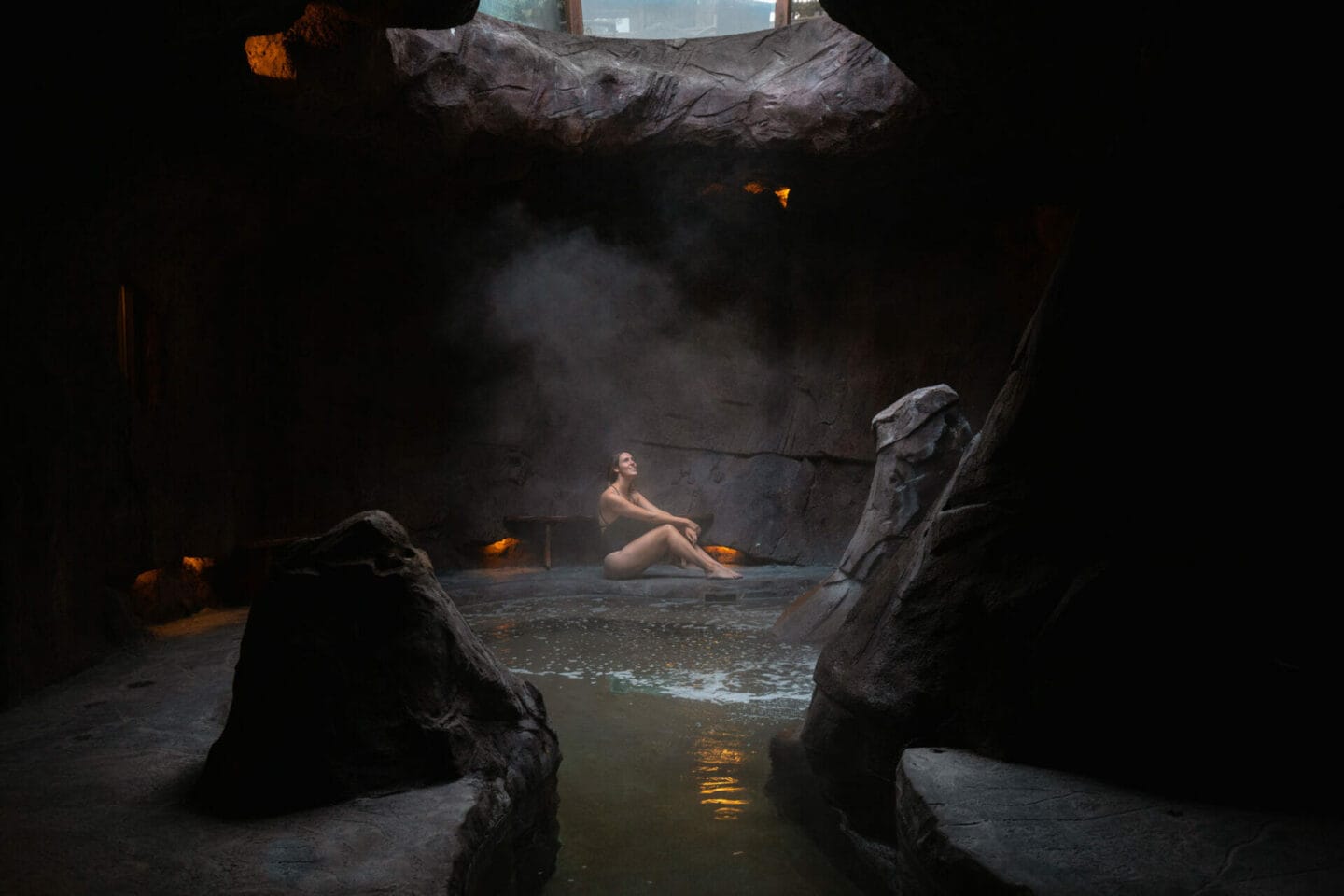
Fox Hotel & Suites is also located on Banff Avenue. It’s a bit further down than Moose Hotel but it’s still within walking distance to the town centre. The split level rooms are amazing and they have small kitchenettes too. The hot pools are ‘underground’ to mirror the historical Cave & Basin and are a lovely place to warm up after a day exploring in the cold. Check prices >
Fairmont Banff Springs
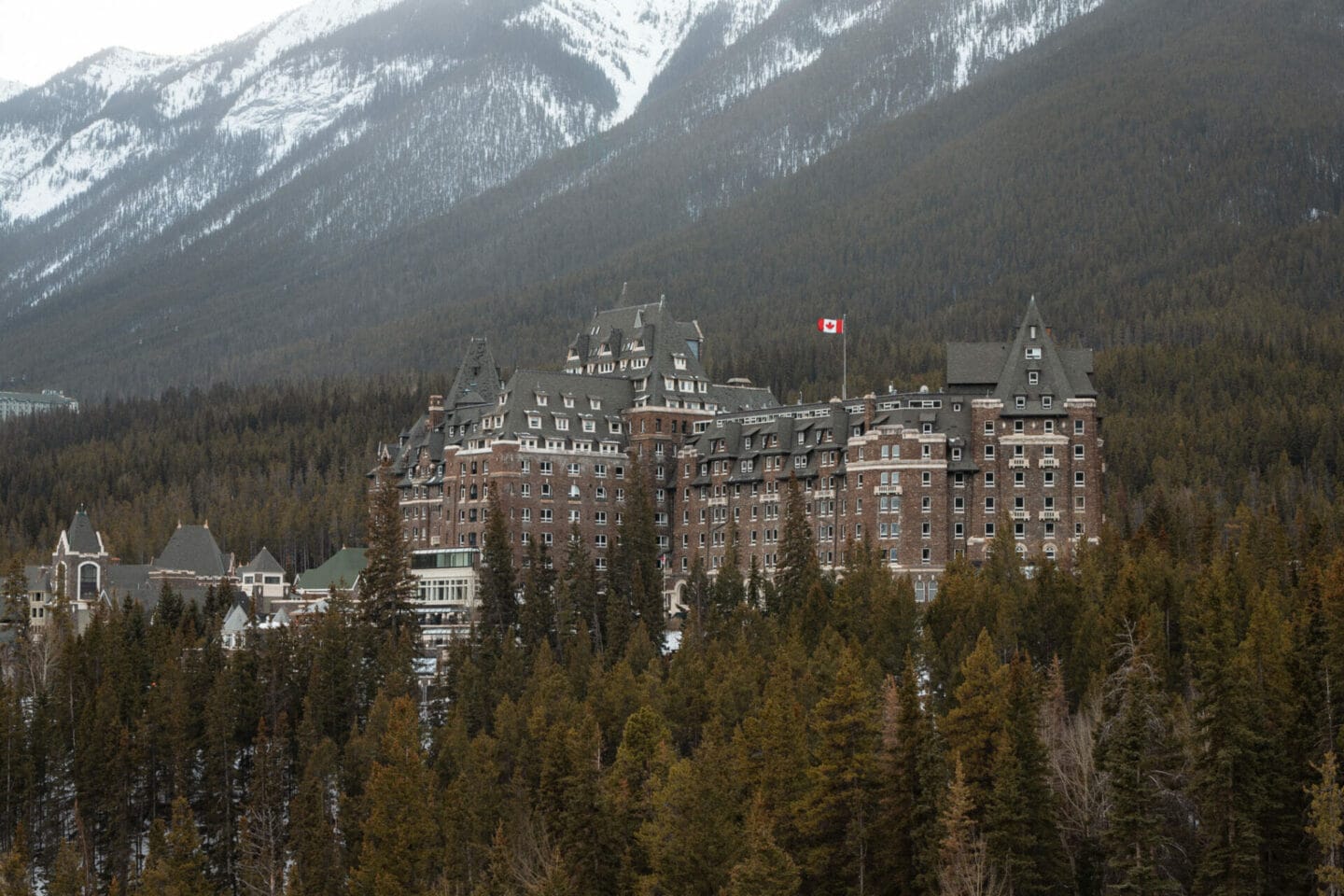
For the ultimate Banff experience, book a stay at the luxury Fairmont Banff Springs, also known as the castle in the Rockies. It’s located on the other side of Banff near Bow River so it’s a lovely 30-minute walk to get to Banff Avenue. Check prices >
The best things to do in Banff National Park in winter
There’s no shortage of fun things to do in Banff in winter, from skating on frozen lakes to relaxing in thermal pools. I’ve written a detailed guide to the best winter activities to do in Banff so I’m going to keep it very brief here with my top 5 recommendations:
Banff Gondola

Banff Gondola is one of my favourite things to do in Banff National Park, especially in winter. The gondola takes you up to the summit of Sulphur Mountain in just 8 minutes. The views as you ascend the mountain are stunning but wait until you get to the top! If you’re looking for the best photo spots in the park, the summit of Sulphur Mountain is arguably one of them.
You can buy your tickets for the Banff Gondola in advance for $65 CAD per adult. I book most of my tours through Get Your Guide as you can book in cancel up to 24 hours before your tour date and get a full refund. The weather changes so quickly in the Canadian Rockies so having this flexibility always gives me peace of mind.
Johnston Canyon
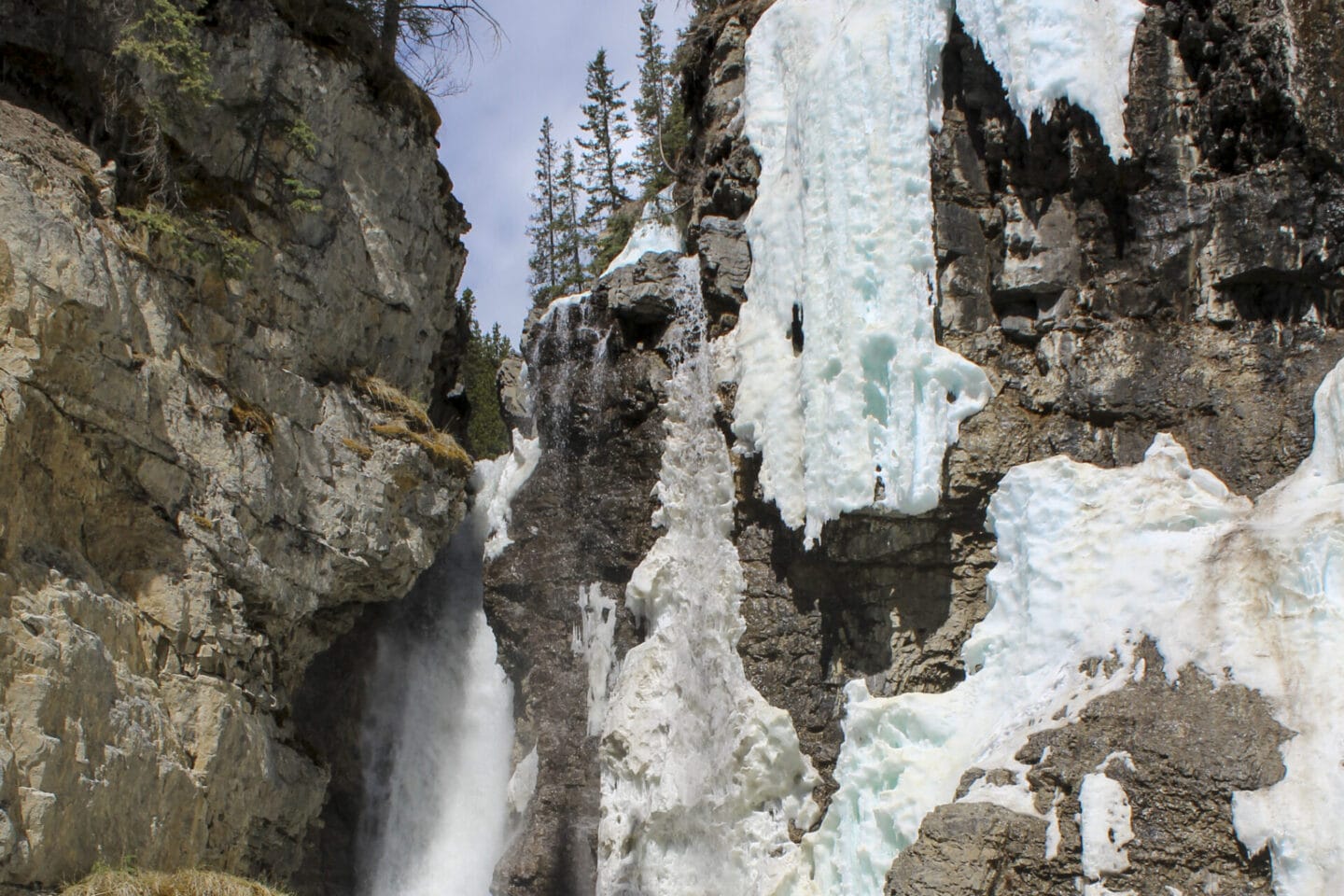
If you visit Banff National Park in winter exploring Johnston Canyon’s frozen waterfalls is a must. The lower and upper falls are beautiful all year round, but they’re especially magical in winter and make you feel like you’ve stepped into Narnia!
While you can explore the canyon on your own, if you’re visiting in winter I recommend joining a tour with an experienced guide. The canyon can be dangerous in the winter due to ice so it’s better to go with a guide who can help you navigate the trail. You can book an ice walk tour which will take you to both waterfalls and teach you about the canyon’s history and geology. Tours include round-trip transportation, ice cleats, hiking poles and a hot chocolate to warm up at the end! Here are a couple of tours I recommend:
Snowshoeing in Banff
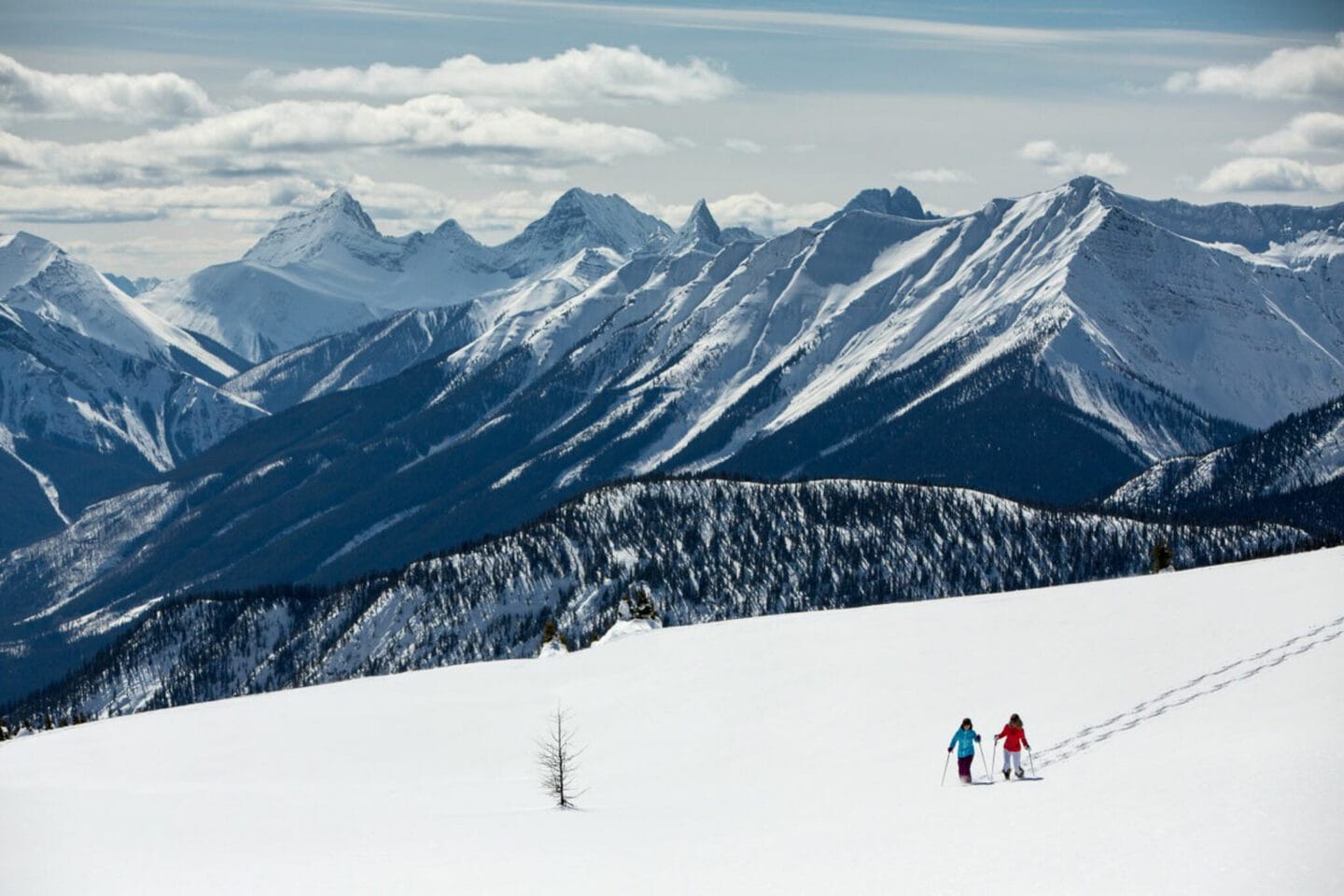
As someone who doesn’t ski or snowboard, snowshoeing is probably my favourite winter activity here in Canada. It takes some getting used to at first but it’s a great way to get outside and enjoy the snow. You can hire snowshoes and crampons from local outdoor outfitters in Banff such as Banff Adventures, Wilson Mountain Sports, or Snowtips.
There are several lovely snowshoeing trails in Banff and Lake Louise that you can explore. I recommend sticking to the well-trafficked trails if you don’t have avalanche training as these are easy to follow and aren’t remote. Here are a few of my favourites:
- Johnson Lake Loop
- Fairview Lookout
- Tunnel Mountain
If you’ve never snowshoed before, I recommend joining a tour like this one. Your guide will help you put on your snowshoes properly, teach you how to walk in them, and navigate the trail for you. They also share lots of insider information and fun facts!
Lake Louise
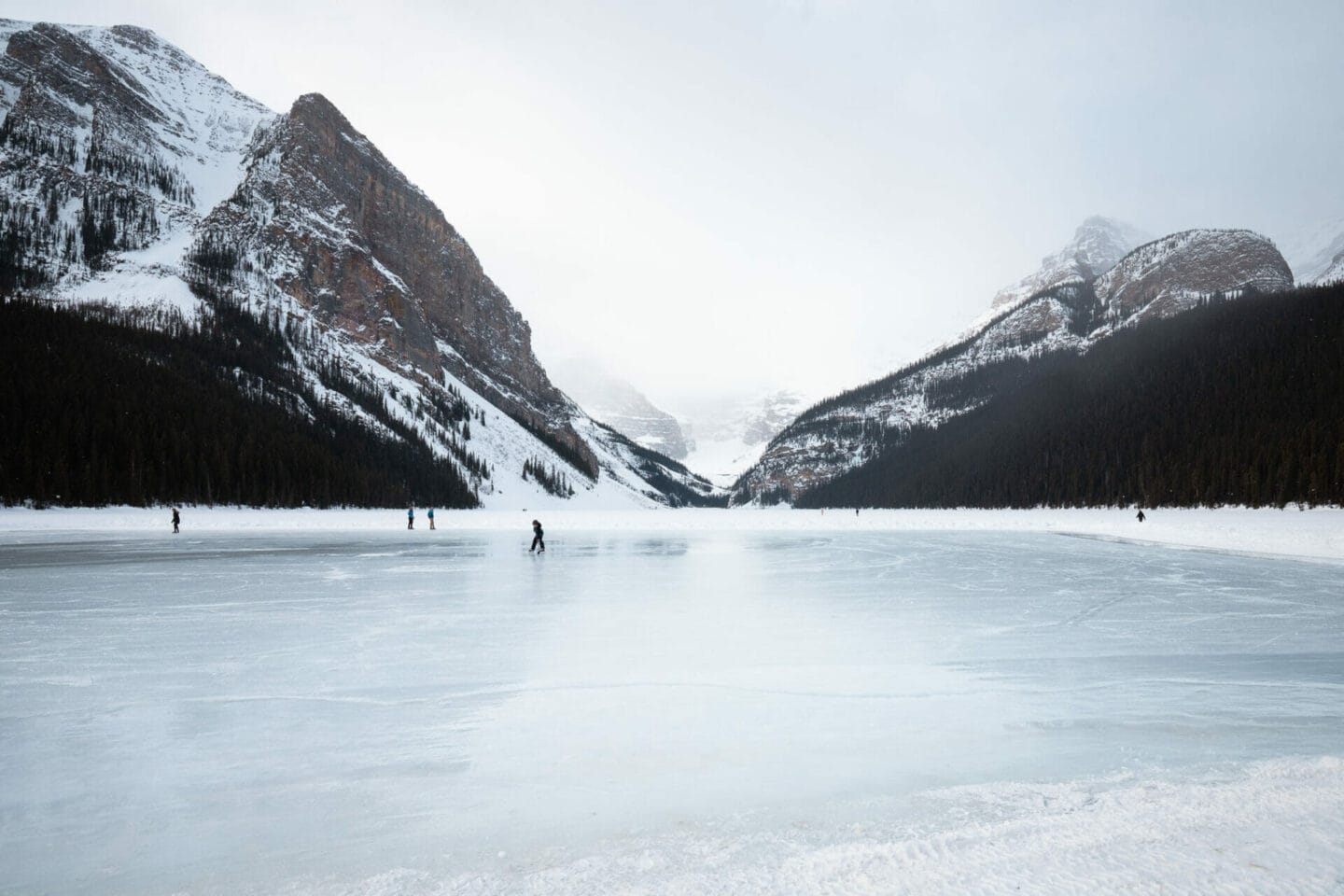
A trip to Banff is never complete without visiting Lake Louise! This iconic lake is only a 40-minute drive from Banff so it’s the perfect day trip although some people decide to stay for a night or two. With a soaring mountain backdrop, Lake Louise is a winter wonderland from December to April. It’s also home to the impressive Fairmont Chateau Lake Louise which is a destination in itself!
Although most people want to visit the lake in summer to see the vivid coloured water, there are so many things to at Lake Louise in winter. Go ice skating on the lake, have afternoon tea at the Fairmont Chateau Lake Louise, enjoy a cocktail at the Ice Bar, and explore the snowshoeing trails.
Skiing in Banff
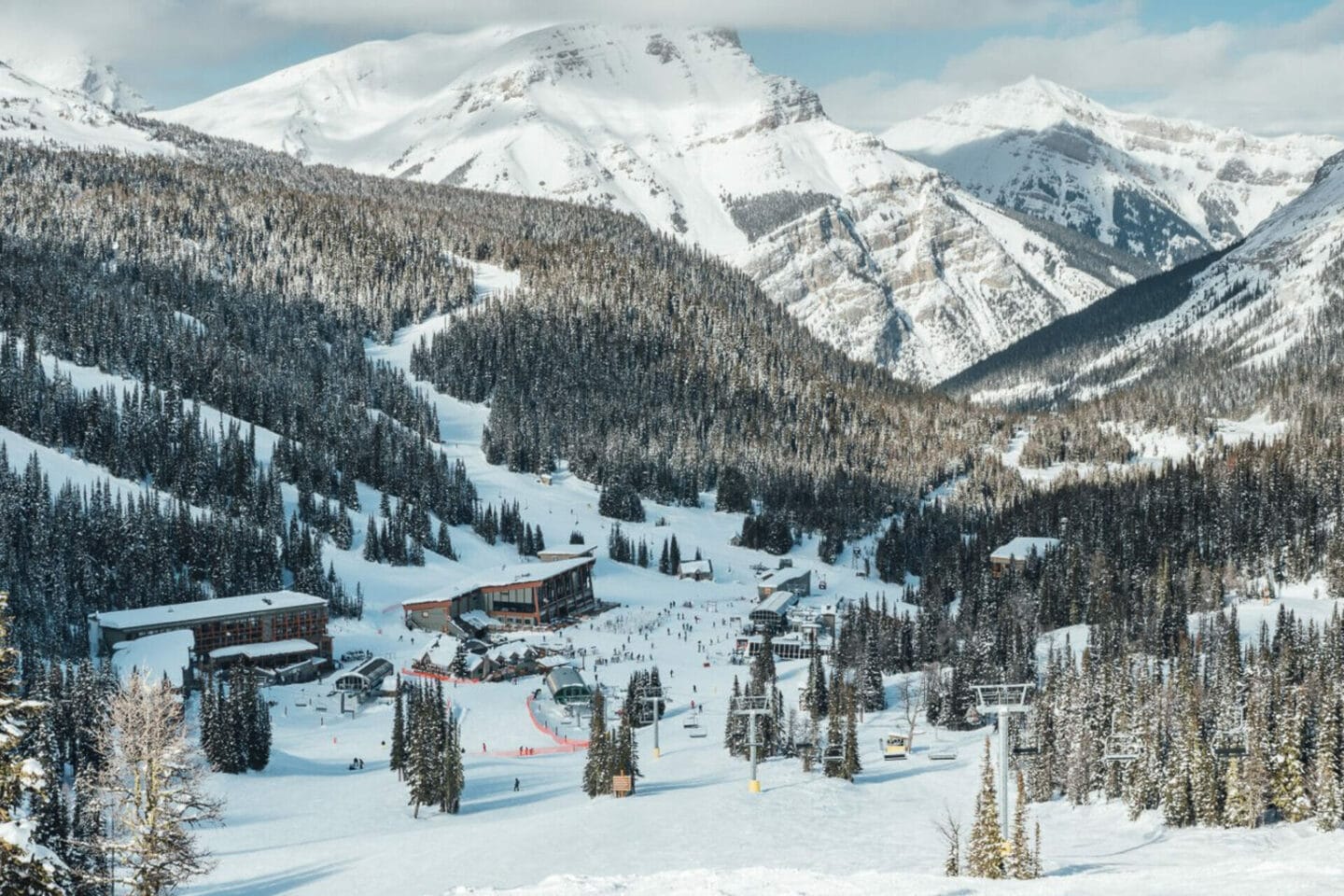
Unsurprisingly, skiing is a very popular activity in Banff National Park in winter. There are actually 3 ski resorts to choose from; Banff Sunshine, Lake Louise and Mt. Norquay. If you’re a keen skier, you can purchase the Ski Big 3 Pass which gives you access to all three resorts. It costs around $450 CAD and also includes complimentary shuttle rides to and from Banff, a pass to the Upper Hot Springs, tubing and other perks. You can rent all of your gear from the Ski Big 3 Adventure Hub which is located on Banff Avenue. They even deliver your gear right to your hotel so you don’t have to carry it back!
Read next | The best winter activities in Banff, Alberta
What to pack for a winter trip to Banff
Winter in Banff can get really cold so you’ll need to be prepared and pack appropriately so you can enjoy the park safely. You’ll want to bring a lot of good quality layers. Here’s an overview of what I took with me on my two trips to Banff National Park in winter:
Base layers
Breathable base layers are crucial when visiting Banff National Park in winter. You’ll want to layer properly to stay nice and warm when outside in the cold. Pack a couple of long-sleeve tops that you can wear underneath all of your other layers. I always take my Patagonia Capilene Midweight Crew and my Icebreaker Merino 200 Oasis Crew Thermal Top as they’re easy to layer. They’re also odour resistant and quick drying.
I also suggest packing a couple of pairs of thermal bottoms for layering under pants as you’ll want the extra warmth. When I went, I took my Patagonia Capilene Midweight Bottoms and my Icebreaker 200 Oasis Leggings and alternated between them.
Mid-layers
You’ll need to pack a couple of mid-layers for insulation. I took my Patagonia Better Sweater 1/4 Zip Fleece for hiking and my Patagonia Los Gatos 1/4-Zip for more casual activities like walking around the town.
Outer layers
I recommend taking a couple of outer layers to suit the different activities you plan to do in Banff. I found myself reaching for my Eddie Bauer Cascadian Down Parka almost every day. It has a temperature rating of -42°C (-45°F) but it’s incredibly lightweight which makes it a very comfortable but cozy option. For hiking and snowshoeing adventures, I wore my Patagonia Down Jacket and my Patagonia waterproof shell. Another good option would be to take a parka like the Columbia South Canyon Sherpa which has a fleece lining but is waterproof.
Pants
For causal sightseeing in Banff in winter, I typically wear a pair of jeans or fleece-lined black leggings on top of my thermal pants. If you’re heading out hiking or snowshoeing, I would recommend wearing thermal pants, fleece-lined leggings, and a pair of waterproof pants.
Socks
As someone with very delicate feet and poor circulation, I changed to merino wool socks a couple of years ago and will never go back! They’re great for hiking and exploring. They are the most breathable option and are also moisture wicking and odour resistant. I’ve also found that they’ve prevented me from getting blisters when hiking long distances.
I normally pack several pairs of socks in case I want to double up on extremely cold days. My go-to hiking socks are Smartwool Classic Hike Full Cushion Crew Socks and Darn Tough Hiker Cushion Micro Crew Socks.
Waterproof shoes
If you’re visiting Banff National Park in winter, you’ll need to bring waterproof winter or snow boots. I’ve had KEEN hiking boots since moving to Canada and would recommend something similar to the KEEN Revel IV Mid Polar Waterproof Winter Boots. They’re packed with insulation and have great grip.
Accessories
Don’t go to Banff in winter without your warm hat/ toque, gloves, and neck scarf/ warmer. I recommend getting items that have fleece lining to keep you nice and warm and stop heat escaping from your extremities.
Winter essentials
After my first trip to Banff National Park in winter, I learnt that the following items are absolute game-changers!
- Hand warmers: Frostbite is no joke in winter in Banff. You can buy these little sachets from most supermarkets and put them in your gloves to help warm up your hands. This is very-much needed if you’ve taken a glove off to take a photo or do up your shoe lace as your hands will be ice cold.
- Lip balm and moisturizer: The air is very dry in Banff in winter so your skin will dry out more quickly than normal. Make sure you have lip balm and hand moisturizer with you and drink lots of water to stay hydrated.
- Sunglasses: The snow can be very bright on your eyes so make sure you pack some polarised sunglasses to cut through the glare.
- Headlamp: If you’re planning to stay out late, I recommend taking a headlamp. I took my Petzl Actik headlamp on our sunrise and sunset adventures.


Final thoughts on visiting Banff National Park in winter
I’ve been to Banff in every season and although fall is my favourite, winter is a close second. I love how much quieter the park is and how beautiful it looks covered in snow. I hope this guide has answered all your questions about visiting Banff National Park in winter. If you need any more information, please leave a comment below and I’ll do my best to help!
Where to explore next?
I absolutely love Banff and have been lucky enough to visit several times over the past three years. If you’re looking for more inspiration for your trip, check out my guides:
- Things to know before your trip to Banff
- The ultimate 4-day Banff itinerary for first-time visitors
- The best things to do in Banff in winter
- Everything you need to know about visiting Banff in winter
- How to get to Banff without a car
Love from Steph
SAVE FOR LATER
Plan for the Canadian Rockies with these guides
The best things to do in Banff in winter (2026/27)

The best photo spots in Banff (+ how to get there in 2026)
The best stops on the Icefields Parkway (+ one-day itinerary)

How to explore Jasper without a car: Everything you need to know
How to explore Banff without a car in 2026

What is the best month to visit Banff (not in winter time).I’m thinking of visiting during summer,Thanks